
Food recipe · About 8 cups (1.9 liters) of chicken stock
Homemade chicken stock
Researched · Established classic specification
Make homemade chicken stock safely with USDA temperature and FDA chilling tips. Simmer bones, veggies 2–4 hrs; strain; refrigerate or freeze.
By DrinkKnird · November 15, 2026
Next: more food recipes · temperature lookup
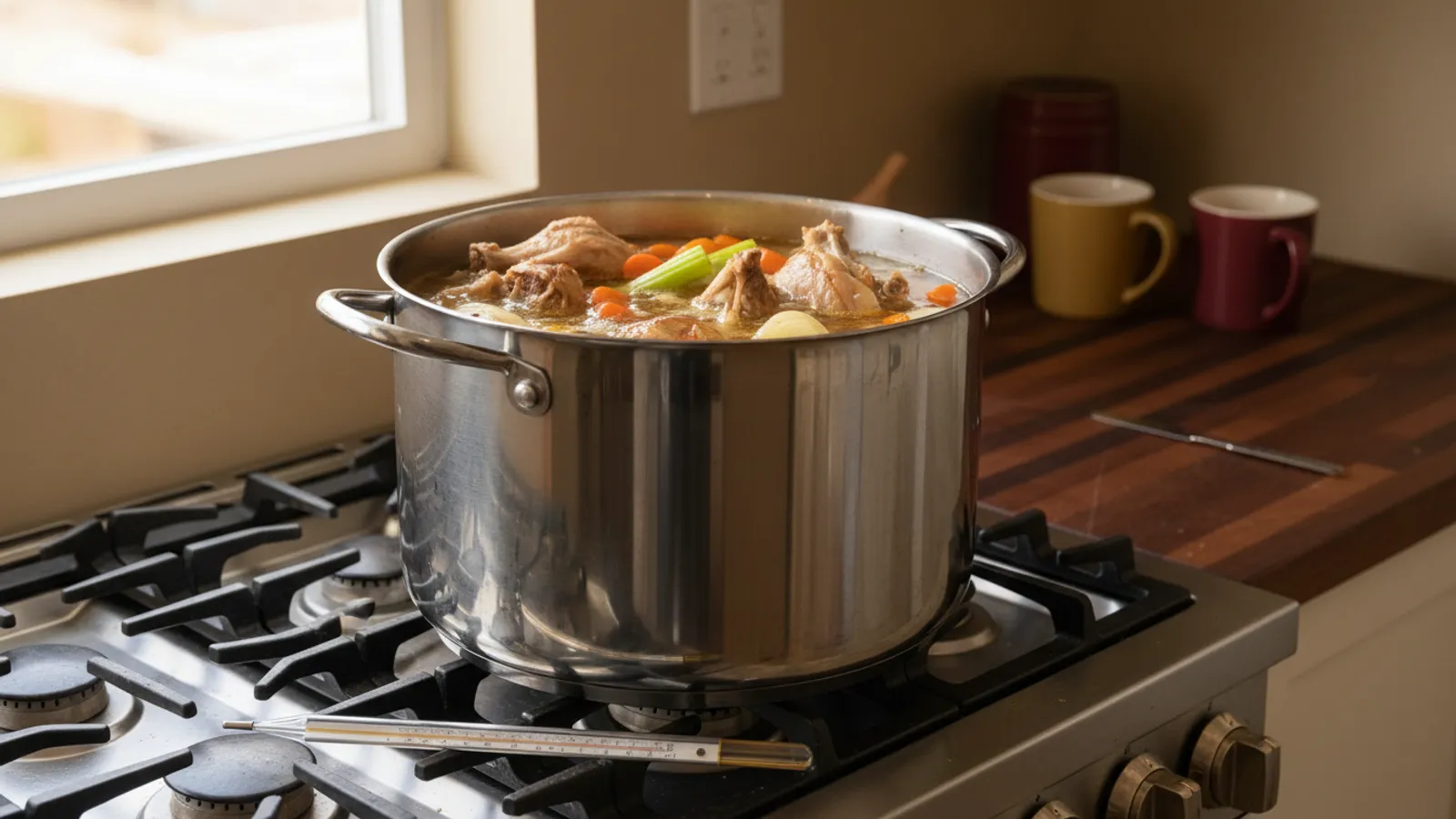
Homemade chicken stock is an essential kitchen staple that adds depth and richness to countless dishes. Using raw chicken bones or a carcass combined with aromatic vegetables and water, this recipe guides you through a gentle simmer to extract flavor and nutrients. Food safety is paramount when working with poultry, so this recipe incorporates USDA recommendations to cook poultry to a safe internal temperature of 165°F (74°C) and FDA advice to chill cooked stock promptly in shallow containers. Following these guidelines helps ensure your stock is both delicious and safe to use. Whether you plan to use it immediately or freeze it for later, this method provides a reliable base for soups, sauces, and more. For more inspiration, explore our [Food recipes](/food-recipes-home-cooking) and [All recipes](/all-recipes).
Recipe
Food recipe
Yield: About 8 cups (1.9 liters) of chicken stock
Original yield: About 8 cups (1.9 liters) of chicken stock
Scales ingredient amounts only. Temperatures, times, ratios, and instruction text stay as written. Saved and printed copies keep the original recipe amounts.
Ingredients
Stock
- 3–4 pounds (1.4–1.8 kg) raw chicken bones and carcass pieces
- 1 large onion, quartered
- 2 medium carrots, peeled and cut into chunks
- 2 celery stalks, cut into chunks
- 12 cups (2.8 liters) cold water, or enough to cover bones and vegetables
- Optional: 2 bay leaves, 5 peppercorns
Instructions
- Place the chicken bones and carcass pieces in a large stockpot.
- Add the quartered onion, carrot chunks, celery chunks, and optional bay leaves and peppercorns.
- Pour in cold water to cover the ingredients by about 1 inch (2.5 cm), approximately 12 cups (2.8 liters).
- Slowly bring the pot to a gentle simmer over medium heat. Avoid boiling to keep the stock clear.
- Once simmering, reduce heat to low and maintain a gentle simmer. Skim off any foam or impurities that rise to the surface during the first 30 minutes.
- Simmer gently for 2 to 4 hours, uncovered or partially covered, to extract maximum flavor and gelatin from the bones.
- Use a food thermometer to check that any meat on the bones has reached at least 165°F (74°C) during simmering, ensuring safe poultry cooking.
- Remove the pot from heat and strain the stock through a fine-mesh sieve or cheesecloth into a large heatproof container.
- Discard solids. Cool the stock quickly by dividing it into shallow containers and placing them in the refrigerator.
- Refrigerate the stock and use within 3 to 4 days, or freeze for longer storage.
Make-ahead
- Stock can be made ahead and refrigerated for up to 4 days or frozen for up to 3 months. Cool quickly in shallow containers before refrigeration or freezing to maintain safety and quality.
Notes
- Substitutions: Use leftover cooked chicken bones or carcass, but ensure they have been cooked to 165°F (74°C) before simmering. Common failure points include boiling the stock vigorously, which can cause cloudiness, and not skimming foam early, which affects clarity and flavor. Rapid chilling in shallow containers is critical to prevent bacterial growth. If you lack a food thermometer, ensure a full simmer for at least 2 hours, but a thermometer is recommended for safety.
- Timing figures are research-based estimates, not kitchen-timed on DrinkKnird equipment.
Why this recipe works
Simmering raw chicken bones with aromatics extracts gelatin, minerals, and flavor compounds, creating a rich, savory stock. Maintaining a gentle simmer and skimming impurities ensures clarity. Cooking to USDA-recommended temperatures and rapid chilling reduce food safety risks associated with poultry.
Recipe sources & development
Established classic specification
Developed from published sources for Homemade chicken stock. Evergreen kitchen staple; food-safety notes matter as much as flavor.
Why this formulation: Simmering raw chicken bones with aromatics extracts gelatin, minerals, and flavor compounds, creating a rich, savory stock. Maintaining a gentle simmer and skimming impurities ensures clarity. Cooking to USDA-recommended temperatures and rapid chilling reduce food safety risks associated with poultry.
Adaptation credit: Chicken stock: raw chicken bones/carcass, onion, carrot, celery, water to cover, simmer gently 2–4 hours skimming; strain. USDA: cook poultry to 165°F. FDA: chill cooked foods promptly (shallow contai
Developed from published sources; not yet kitchen-tested by DrinkKnird.
- Homemade chicken stock specification notes — DrinkKnird research brief · researched 2026-11-15
Chicken stock: raw chicken bones/carcass, onion, carrot, celery, water to cover, simmer gently 2–4 hours skimming; strain. USDA: cook poultry to 165°F. FDA: chill cooked foods promptly (shallow containers). Refrigerate a
- Safe Minimum Internal Temperature Chart — fsis.usda.gov · researched 2026-11-15
USDA FSIS publishes safe minimum internal temperatures for poultry and other meats used in stocks.; Poultry is listed at 165°F (74°C).; Leftovers should be handled with the same temperature discipline as other cooked foo
- Safe Food Handling — fda.gov · researched 2026-11-15
FDA safe food handling covers clean, separate, cook, and chill steps for home kitchens.; Rapid chilling of cooked foods is part of reducing foodborne illness risk.; Homemade stock should be refrigerated or frozen after c
- Kitchen Thermometers — fsis.usda.gov · researched 2026-11-15
FSIS recommends food thermometers for verifying internal temperatures.; Placement in the thickest part of meat or poultry improves accuracy.
Related recipes
Researched
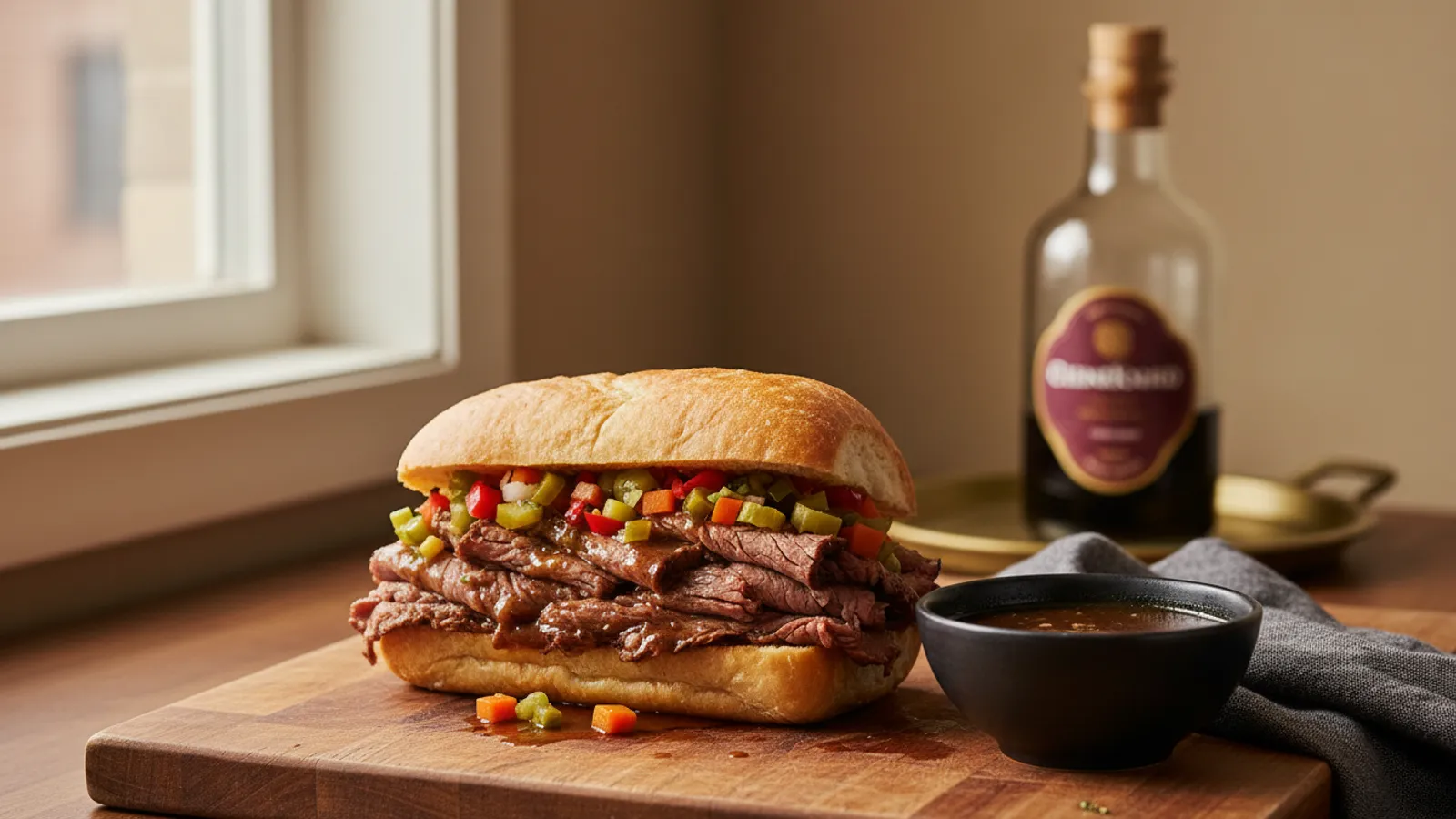
Restaurant-inspired Chicago Italian beef sandwich
Make a restaurant-inspired Chicago Italian beef sandwich at home with seasoned roast beef, savory broth, and classic toppings on an Italian roll.
Researched
Cranberry-Orange Relish
Fresh cranberry-orange relish with sugar—food-processor, make-ahead, Christmas and Thanksgiving. Researched, not kitchen-tested.
Researched
Christmas Sugar Cookies (Cut-Out)
Cut-out Christmas sugar cookies with chillable dough and simple icing—cookie-box friendly. Researched, not kitchen-tested.
Researched
Dry-Brine Turkey (USDA Salt Ratio)
Dry-brine turkey with USDA FSIS 1 Tbsp kosher salt per 5 lb, fridge up to 2 days, roast to 165°F. Researched, not kitchen-tested.
Questions about this recipe? Use the contact form. Follow along on Instagram.