
Food & Drink History
The History of Chicago Italian Beef
Discover the documented history and origins of Chicago's Italian beef sandwich, its ties to the city's culture, and what remains disputed.
By DrinkKnird · October 10, 2026 · 3 min read
In this section: Food & Drink History · Food & drink history
What it is
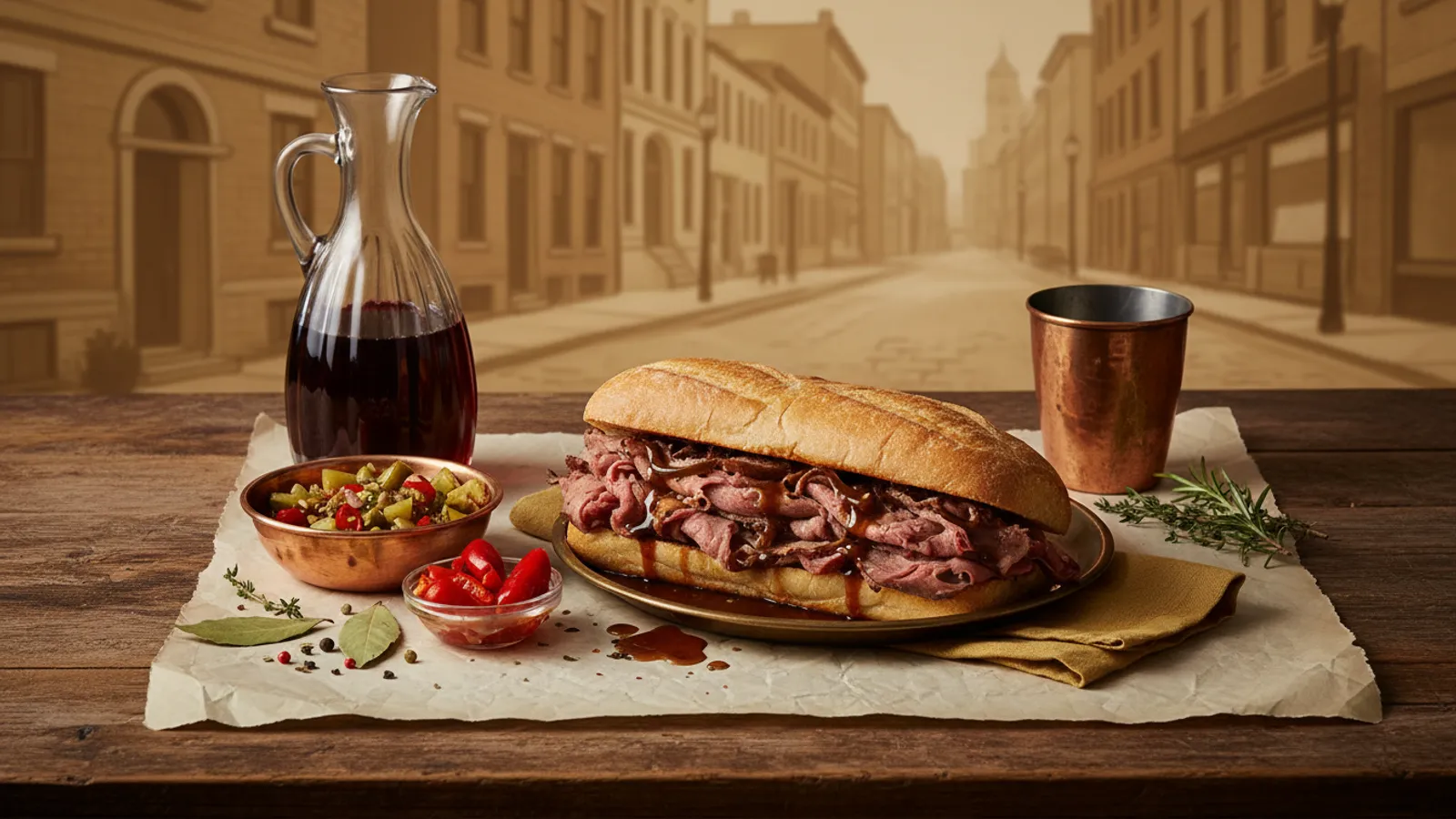
The Italian beef sandwich is a distinctive Chicago culinary tradition consisting of thinly sliced, seasoned roast beef served on an Italian-style roll. The beef is typically cooked with a blend of spices, sliced thin, and then soaked or dipped in its own cooking juices, known as au jus. The sandwich is often accompanied by hot giardiniera (a spicy pickled vegetable mix) or sweet peppers, adding a characteristic tang and heat. This combination creates a flavorful, juicy sandwich that has become emblematic of Chicago's street food culture.
Documented origin claims
The origin of the Italian beef sandwich is closely tied to Chicago's Italian-American community, but no single, definitive inventor or date is universally agreed upon. Multiple family-run beef stands and local businesses claim early roles in developing the sandwich, with evidence primarily coming from oral histories, newspaper accounts, and family traditions rather than formal archival documentation.
Chicago Tribune food history reporting highlights that the sandwich emerged as a working-class staple, with various stands and families in Chicago asserting they were among the first to serve it. Serious Eats corroborates this by describing the sandwich as a product of neighborhood beef stands that have preserved the tradition over decades. However, no single establishment or individual is conclusively credited with inventing the Italian beef sandwich, reflecting a collective evolution rather than a singular creation.
Time, place, and why Chicago is associated with it
Chicago's association with the Italian beef sandwich is deeply rooted in its history as a major meatpacking and immigrant hub. By the late 19th and early 20th centuries, Chicago had become the center of the American meatpacking industry, with the Union Stockyards employing tens of thousands and processing a significant portion of the nation's beef. This industrial backdrop provided abundant access to beef and created a demand for affordable, hearty food among the city's working-class population, including many Italian immigrants.
The sandwich likely developed in Chicago's Italian-American neighborhoods during the early to mid-20th century as a practical and flavorful way to use roast beef trimmings and leftovers. The Italian roll and the use of giardiniera reflect the community's culinary heritage. The Chicago History Museum notes that Italian-American businesses and street foods, including the Italian beef sandwich, became emblematic of the city’s neighborhoods rather than being linked to a single national brand or origin story.
What remains uncertain or disputed
The precise origin of the Italian beef sandwich remains disputed due to the lack of definitive archival records or contemporaneous documentation pinpointing its invention. Multiple family businesses and beef stands in Chicago claim to have originated the sandwich, but these claims are based largely on oral histories and local lore rather than verifiable evidence.
The exact timeline of when the sandwich first appeared is also unclear. While it is generally accepted that the sandwich emerged in the early to mid-20th century, some sources suggest variations in the decades and neighborhoods where it first gained popularity. Additionally, the sandwich’s exact recipe and presentation have evolved over time, with some debate over the original accompaniments and preparation methods.
How the tradition looks today
Today, the Italian beef sandwich remains a beloved and iconic part of Chicago’s food culture. It continues to be served primarily by family-owned beef stands and local eateries that maintain the traditional preparation methods. The sandwich is celebrated for its connection to Chicago’s working-class and immigrant heritage, embodying the city’s history of meatpacking and neighborhood culinary innovation.
The tradition thrives in Chicago neighborhoods and beyond, with many establishments offering variations that include different levels of juiciness, spice, and toppings. Despite its widespread popularity, the Italian beef sandwich remains closely identified with Chicago, symbolizing the city’s unique blend of cultural influences and its enduring working-class roots.
For readers interested in broader culinary histories, exploring the History of food and beverage offers additional context on how regional foods develop and become emblematic of their cities.
Related DrinkKnird reading: Cocktail recipes.
Sources
Selected references used for this guide. Prefer primary and government sources where available.
- The original Italian beef — chicagotribune.com
- The Chicago Italian Beef Sandwich — seriouseats.com
- Chicago History Museum — chicagohistory.org
- The city that changed architecture forever — bbc.com
- Checagou From Indian Wigwam To Modern City 1673-1835 : Milo M. Quaife : Free Download, Borrow, and Streaming : Internet Archive — archive.org
- American Experience | Chicago: City of the Century | Timeline — web.archive.org
Keep reading

Food & Drink History
Origins of the Negroni
Explore the documented origins and disputed stories behind the Negroni cocktail and its association with Florence.

Food & Drink History
The origin of the cocktail
Explore the early documented uses, 1806 definition, and disputed origins of the cocktail in American history.
Food & Drink History
The Art of Winter Food Storage: A Historical Journey
A short history of winter food storage—from drying and salting to refrigeration—and what traditional methods still teach home cooks.