
Food & Drink History
A short history of rum
Explore the history of rum from its sugarcane origins to its place in Caribbean trade and American bars, understanding its diverse styles and cultural importanc
By DrinkKnird · November 15, 2026 · 3 min read
In this section: Food & Drink History · Food & drink history
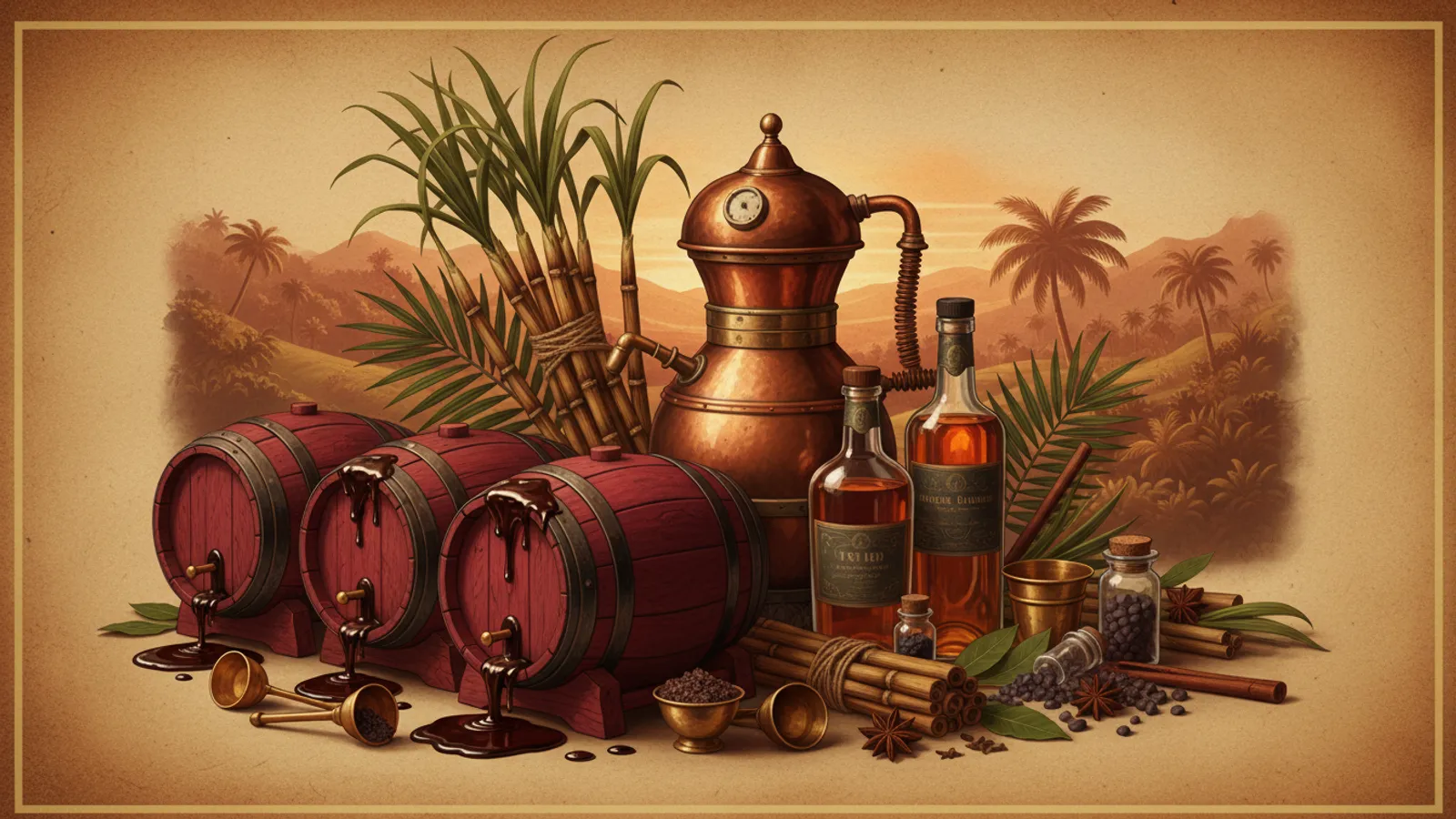
Rum is a distilled alcoholic beverage primarily made from sugarcane by-products, such as molasses or sugarcane juice. Molasses is a thick, dark syrup left over after sugar is extracted from sugarcane, and it serves as a key raw material in many rum productions. When making rum at home or selecting a rum for cooking or cocktails, it’s useful to understand that the base ingredient influences the flavor profile. For example, rum made from molasses tends to have a richer, deeper sweetness, while those made from fresh sugarcane juice often have lighter, more vegetal notes. This means that when choosing rum for a recipe, consider the flavor intensity you want to impart. Avoid using very cheap or industrial rums that may have harsh or overly sweet flavors, as these can overpower dishes or cocktails.
The history of rum is closely tied to the Caribbean’s sugar industry. As sugarcane plantations expanded in the Caribbean colonies, molasses became widely available as a by-product of sugar refining. This abundance of molasses made it an economical and practical base for distilling rum. For a home cook, this historical connection highlights why Caribbean rums often have a distinct character shaped by the region’s climate and sugarcane agriculture. When cooking Caribbean dishes or making tropical cocktails, using a Caribbean rum can add authenticity and depth. However, be mindful that the sugarcane source and production methods vary widely, so experimenting with different rums can help you find the best match for your recipe.
By the mid-19th century, rum had become a staple in American bar culture, as evidenced by its inclusion in Jerry Thomas’s 1862 cocktail manual, How to Mix Drinks. This shows that rum was not only a Caribbean export but also a popular spirit in the United States, used in a variety of mixed drinks. For home bartenders, this historical fact means that rum is a versatile spirit suitable for many classic cocktails, from simple highballs to more complex concoctions. When mixing drinks, use rum thoughtfully to balance sweetness and strength, and avoid mixing it with too many overpowering flavors that can mask its nuanced taste.
Rum’s definitions and styles vary significantly around the world, with no single universal standard. Different countries regulate rum production based on factors like the type of sugarcane by-products used, aging periods, and distillation techniques. This means that rum can range from light and clear to dark and richly aged. For a home cook or bartender, this diversity offers a wide palette of flavors to explore. When selecting rum, consider the style that best suits your culinary or cocktail needs—light rums for refreshing drinks, dark rums for cooking or deeper flavors. Avoid assuming all rums are interchangeable; choosing the right type can elevate your recipe.
The origin of the word rum itself is uncertain, with various theories but no definitive answer. This linguistic ambiguity reflects the spirit’s complex and multifaceted history. Rather than focusing on a single origin story, it’s more helpful to appreciate rum as a category of spirits shaped by geography, culture, and trade. For home cooks, this means embracing rum’s diversity and experimenting with different styles to understand how each can enhance your dishes and drinks.
In summary, rum’s history is a rich tapestry woven from sugarcane agriculture, Caribbean colonial trade, cultural adoption in American bars, and diverse legal definitions. Its foundation in sugarcane by-products like molasses connects it to the Caribbean’s economic past, while its documented use in 19th-century cocktail manuals confirms its longstanding role in mixed drinks. Understanding these aspects helps home cooks and bartenders appreciate rum’s versatility and select the right rum to suit their culinary and beverage creations.
For further exploration of spirits and their cultural contexts, see the broader History of food and beverage and discover how rum features in classic Cocktail recipes.
Sources
Selected references used for this guide. Prefer primary and government sources where available.
- Rum — britannica.com
- How to Mix Drinks (Jerry Thomas, 1862) — gutenberg.org
- Rum - Etymology, Origin & Meaning — etymonline.com
- Cabin and plantation songs — library.si.edu
Keep reading
Food & Drink History
Philippe the Original and the French dip
Explore the disputed origins of the French dip sandwich in Los Angeles and what Philippe the Original and Cole's actually serve.
Food & Drink History
What Jalisco birria is
Learn about Jalisco birria, a flavorful Mexican stew with origins in goat meat and dried chile paste, its essential consomé broth, regional variations, and how
Food & Drink History
The Buena Vista Cafe and San Francisco Irish coffee
Explore the history and distinctive style of the Buena Vista Cafe's Irish coffee in San Francisco, its regional context, and how to make it at home.